
What Toxic Air Is Doing to India's Children — And How We Can Fight Back
Eleven-year-old Aanya sits at her desk in Mumbai, watching her classmates during recess. She is not outside playing like them. Instead, she stays indoors—her asthma triggered easily by the visible smog that hangs over the city most days. Her mother has become vigilant about checking the Air Quality Index each morning before deciding if Aanya should attend school or study from home. "I never worried about this when I was her age," her mother reflects. "We played outside freely. Now I am terrified about what the air is doing to her lungs."
Aanya's story echoes across India's cities and rural villages—a quiet crisis unfolding in the bodies of the nation's youngest population. While headlines focus on dangerous air quality days and school closures, a more profound damage is occurring silently and progressively in millions of children: the compromising of their developing lungs, their growing bodies, and their futures.
The Vulnerable Years: Why Children Bear the Heaviest Burden
Children are not small adults. Their physiology makes them far more vulnerable to air pollution than those of us already grown. Every breath matters during these critical years of development, yet children's developing bodies face threats we are only beginning to fully understand.
Children breathe faster than adults—up to 30 breaths per minute compared to 16 for adults—meaning they inhale more air, and therefore more pollutants, with every minute. Their airways are also narrower, making them more susceptible to obstruction and inflammation from particulate matter. Additionally, children spend more time outdoors than most adults, and when they play near ground level, they are exposed to the highest concentrations of heavy pollutants like PM2.5 that settle close to the earth.
Most critically, children's lungs are still developing through adolescence. This window of lung development, which extends into the teenage years, is irreversible. Damage to the lungs during these years can result in permanently reduced lung capacity—a deficit that may persist throughout their entire lives.
The WHO has issued a stark assessment: 93% of the world's children now breathe air that exceeds safe pollution limits. In India, the situation is even more concerning.
The Silent Cost: How Toxic Air Damages Children's Health
The impact of air pollution on children begins even before birth. Pregnant women exposed to high levels of PM2.5 during pregnancy show higher rates of adverse outcomes: low birthweight, preterm birth, and stillbirth. Research from Tamil Nadu demonstrated that a 10 µg/m³ increase in PM2.5 during pregnancy linked to a 4-gram drop in infant birthweight and a 2% increase in low birthweight prevalence. Across India, a pan-national study of over 149,000 children provided compelling evidence of this association, prompting the recognition that reducing air pollution is essential to meeting the World Health Assembly's goal of reducing low birthweight by 30% by 2025.
But the damage does not stop at birth. Once born, children face compounding risks:
Impaired Lung Development and Reduced Lung Function: Studies in southern India measuring children's lung function through spirometry found a striking pattern: children exposed to higher AQI levels have measurably reduced lung capacity compared to those in cleaner air. Each unit increase in AQI correlated with a decline in forced expiratory volume—the amount of air children can exhale in one second—a key marker of lung health. Children in the "unhealthy" AQI category showed mean lung function of only 1.36 liters compared to 1.72 liters in children from "good" AQI areas. This difference persists throughout their lives.
Stunted Growth and Development: Air pollution affects not just respiration but overall growth. If average pollution levels in India were reduced to WHO-recommended standards, the percentage of stunted children would decline by 10.4 percentage points and severely stunted children by 5.17 percentage points. This translates to approximately 14.3 million fewer stunted children—a staggering number representing preventable developmental impairment. Stunting in childhood has lifelong consequences for education, earning potential, and health.
Respiratory Diseases and Asthma: Acute respiratory infections remain one of the leading causes of childhood mortality in India, accounting for approximately 13–16% of all deaths in children under five, affecting around 400,000 children annually. Each 10 µg/m³ jump in PM2.5 triggers a 20–40% spike in emergency room visits for respiratory distress in Delhi hospitals. The inflammation caused by air pollution irritates airways and triggers asthma in susceptible children—a condition that, while manageable, can severely limit childhood activity and well-being.
Cognitive and Behavioral Effects: Emerging research reveals that air pollution's impact extends beyond the lungs. PM2.5 particles that enter the bloodstream can cross the blood-brain barrier, triggering neuroinflammation. This inflammation is linked to reduced IQ, attention difficulties, memory problems, and increased anxiety and behavioral issues in children. In polluted Indian cities, this translates to reduced academic performance, weaker concentration in classrooms, and mood disturbances.
The Statistics That Demand Our Attention: In 2020, an estimated 116,000 Indian infants died within their first month of life due to air pollution exposure—approximately one baby every five minutes. Among children under five, respiratory infections linked to air quality contribute to hundreds of thousands of deaths annually. These are not abstract numbers—each represents a family, a future, a life that could have been different.
The Hidden Cost: School, Learning, and Future Potential
On high-pollution days in India's cities, schools shut. Children study from home through screens. Physical classes halt. But the impact extends far beyond these visible disruptions.
Absenteeism and Academic Performance: Children with respiratory conditions related to pollution miss school more frequently. Poor air quality is linked to higher rates of asthma and bronchitis, conditions that keep children home. When children miss school repeatedly, they fall behind academically. Over time, this impacts not just their current education but their career trajectories.
Cognitive Impairment: As mentioned, air pollution affects brain development and function. In high-pollution environments, children show reduced memory, impaired attention, and difficulty concentrating—exactly the capacities required for learning. The cumulative effect across a school year, across years of childhood, represents lost learning potential and limited intellectual development.
Physical Activity Limitations: Asthma and respiratory symptoms triggered by air pollution restrict children's ability to play, exercise, and participate in sports. Physical activity is critical for healthy childhood development—cardiovascular health, motor development, emotional well-being, and peer relationships. When children cannot safely play outdoors, a fundamental dimension of childhood is lost.
Psychological Impact: The constant worry about air quality—for children and their families—creates emotional stress. When children cannot attend school, cannot play outside, or must wear masks to venture outdoors, the psychological toll is real, contributing to anxiety and emotional distress.
What Schools Can Do: Creating Safer Learning Environments
Several Indian schools are already demonstrating leadership in protecting children from air pollution. Their approaches offer a roadmap:
Air Quality Monitoring and Real-Time Response: The American Embassy School in New Delhi installed 47 air quality monitors across its campus and integrated real-time monitoring into decision-making. GD Goenka Public School, Vasant Kunj monitors air quality and restricts outdoor activities when pollution exceeds safe limits, transitioning to indoor activities with air purifiers.
Air Filtration Systems: Elite schools like The American School of Bombay have invested in centralized HEPA filtration systems maintaining AQI of 10 indoors (the standard for operation theaters) compared to outdoor AQI of 180. While such investments are significant, proactive schools recognize them as essential infrastructure for student health. Ascend International School equips each classroom with two air purifiers and multiple units in common areas.
Activity Rescheduling: Schools like Seth Anandram Jaipuria School in Kanpur reschedule outdoor activities to early mornings when pollution levels are typically lower. This simple practice can substantially reduce children's exposure during outdoor play.
Communication with Families: Schools are establishing clear protocols for communicating with parents about pollution levels and school operations. This enables families to make informed decisions about their children's schedules and prepare appropriate protective measures.
Awareness and Health Programs: Schools are integrating air quality awareness into curricula, helping students understand the connection between air quality and health. India's National School Health & Wellness Programme, launched in 2020, provides a platform for incorporating respiratory health education into government and aided schools.
What Parents Can Do: Protective Strategies in a Polluted Environment
While systemic change is essential, parents can take meaningful steps to protect their children's health today:
Monitor AQI Daily: Check the Air Quality Index each morning using apps or official resources. Understand what different AQI levels mean for your child's activity. When AQI is "poor" or above, restrict outdoor activities and keep children indoors.
Use Masks Appropriately: For children over age 2, N95 or N99 masks can filter 95–99% of harmful airborne particles when worn correctly. Teach children how to wear masks properly—covering nose and mouth completely—and ensure masks fit snugly without gaps. Do not share masks between children; mark each child's mask individually.
Create a Healthy Home Environment: Install air purifiers in bedrooms where children sleep, and in living areas where they spend significant time. Maintain healthy indoor humidity (30–50%) to prevent airway dryness. Avoid burning incense, mosquito coils, or other materials indoors that create additional indoor pollution.
Time Outdoor Activities Wisely: Pollution levels are typically highest mid-morning to mid-afternoon. Schedule outdoor play early in the morning or later in the evening when possible. On high-pollution days, keep outdoor activity brief and low-intensity to minimize deep breathing of polluted air.
Avoid Strenuous Outdoor Activities on Polluted Days: Running, cycling, and intense sports increase breathing rates and lung exposure to pollutants. On poor air quality days, move these activities indoors or postpone them.
Support Respiratory Health: Ensure children receive flu and pneumonia vaccinations to protect developing lungs from respiratory infections. Encourage a nutrient-rich diet with antioxidant-rich foods—citrus fruits, leafy greens, turmeric—that support immune and respiratory function.
Recognize Warning Signs: Learn the signs of respiratory problems—persistent cough, wheezing, shortness of breath, chest pain—and seek medical evaluation promptly. Early diagnosis of asthma or other conditions allows timely management.
Collaborate with Schools: Engage with school administrators about indoor air quality. Ask about air filtration systems, discuss outdoor activity schedules on polluted days, and advocate for air quality monitoring. Parent voices matter in driving school-level action.
Looking Forward: A Future Where Children Can Breathe
The damage air pollution is inflicting on India's children is real and measurable. Yet so too is the capacity to change this trajectory.
In communities where awareness has grown, where families understand the risks and schools have invested in protective measures, children are breathing cleaner air and developing more healthily. The gap between what is possible and what currently exists is not a matter of technology or knowledge—it is a matter of priority and investment.
Every parent's vigilance about checking AQI, every school's decision to install air purifiers, every community's advocacy for cleaner air contributes to shifting this crisis. The children growing up today in cleaner environments will not only be healthier; they will be smarter, stronger, and capable of reaching their full potential.
Aanya deserves to play outside without fear. Every child in India deserves the simple right to breathe clean air while their lungs develop and their futures unfold. This is not an impossible goal—it is a necessary one.
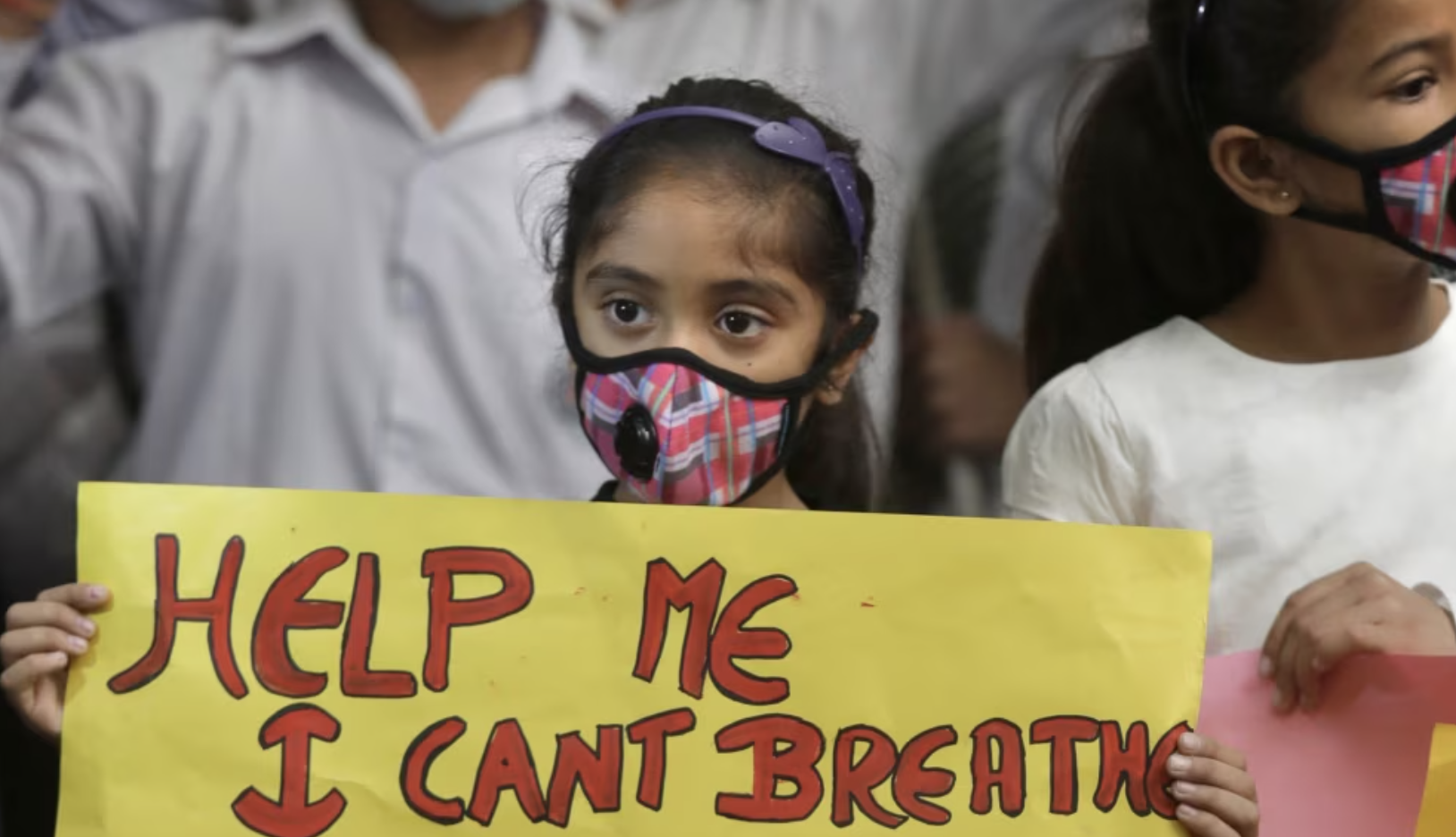
Image Credit: Reuters | FILE – A girl protests air pollution in New Delhi, Nov. 6, 2016 (Source: UNICEF).
Author: Srishti Chhatwal